
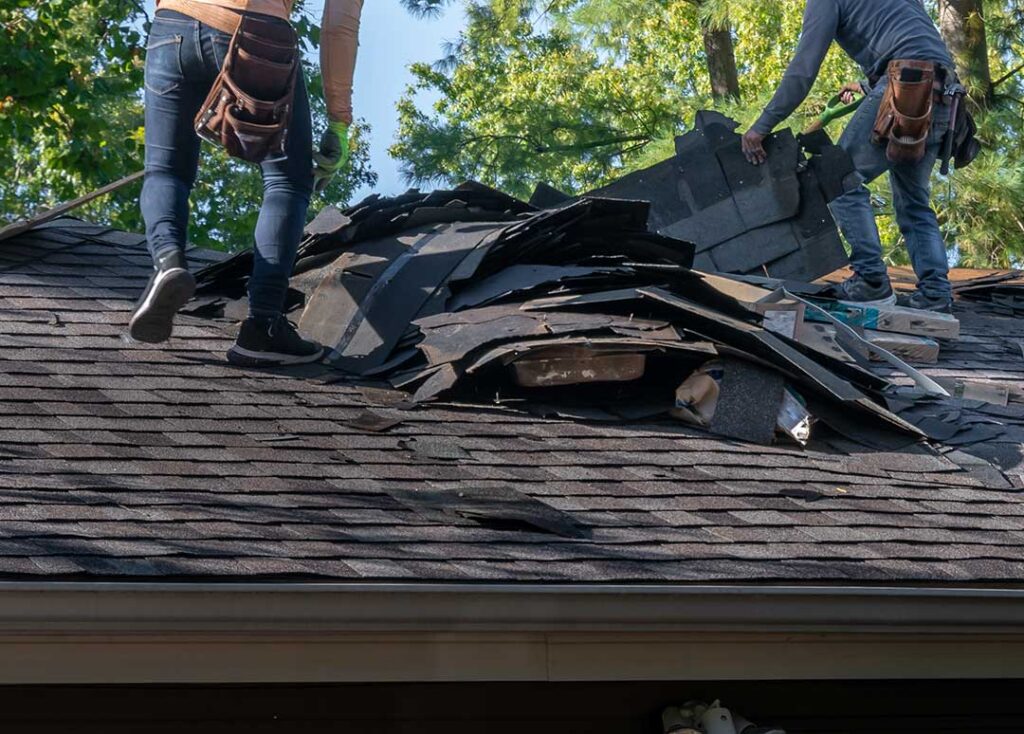
What counts as roof debris?
Roof debris includes leaves, pine needles, small branches, twigs, seed pods, windblown litter, and sediment that collect on shingles, flashing, gutters, or around roof drainage points. After autumn leaf fall, strong wind, heavy rain, and winter storms, debris can accumulate quickly on homes throughout Newburgh, NY.
A small amount of loose material is usually not an immediate emergency. Problems develop when debris stays wet, blocks water flow, hides damaged roofing, or adds weight to areas that are not designed to hold standing piles of organic material.
Debris deserves prompt attention when it:
- Covers roof drains, valleys, or gutter openings
- Forms thick, wet piles that do not dry
- Includes large branches or storm-thrown objects
- Collects near chimneys, vent pipes, skylights, or roof edges
- Has caused water to back up into gutters or onto exterior walls
- Appears on a roof with missing, curled, cracked, or loose shingles
Is it safe to remove roof debris yourself?
Removing debris from a roof is safe only when the roof is low, dry, stable, and easy to access without walking on steep or fragile surfaces. Many injuries occur because people underestimate how slippery shingles become after rain, frost, algae growth, or wet leaves.
Before starting, assess the conditions from the ground. Do not climb onto the roof if it is wet, icy, covered with heavy debris, steep, visibly damaged, or difficult to reach securely. Avoid roof work during wind, rain, freezing temperatures, or periods when surfaces are damp from overnight condensation.
Use a stable extension ladder only when it can be placed on firm, level ground and secured against movement. Keep the ladder away from overhead electrical lines and maintain three points of contact while climbing.
If debris is located on a steep roof, above a high wall, near electrical equipment, or around storm damage, the safest choice is to avoid entering the area. A roof that appears sound from the ground may contain hidden damage beneath the debris.
What tools are appropriate?
The safest tools are those that remove loose material without scraping, puncturing, or lifting roofing components. A roof rake with a long handle can be useful for clearing light debris from some low-slope areas while standing on the ground. It should be used gently and pulled toward the eave rather than pushed aggressively uphill.
For accessible, low sections, useful equipment may include:
- Work gloves with a firm grip
- Eye protection
- A soft-bristle broom or roof brush
- A plastic leaf scoop
- A lightweight bucket or debris bag
- A garden hose for rinsing gutters after loose material is removed
- A stable ladder with a ladder stabilizer, when appropriate
Avoid metal rakes, shovels, pressure washers, and sharp tools. Metal edges can remove protective granules from asphalt shingles, scratch metal flashing, damage membrane roofing, or loosen sealants around penetrations.
Leaf blowers can move dry leaves from some roof surfaces, but they may also scatter debris onto neighboring property, clog lower gutters, or blow material under shingles and flashing. If used, the airflow should be kept low and directed away from roof edges, vents, and fragile components.
How should debris be removed from a low roof?
Start by clearing the ground around the work area. Remove furniture, toys, garden tools, and other objects that could be damaged by falling branches or wet debris. Make sure children and pets remain away from the ladder and drop zone.
Work from the roof edge only if the surface is dry and the slope is gentle enough to provide secure footing. Begin with loose, lightweight material. Use a soft broom or plastic scoop, moving debris downhill in small amounts. Do not drag heavy branches across shingles.
Never push debris into gutters without removing it afterward. A pile that looks cleared from the roof may simply be sitting in the drainage system. Check gutter openings, downspout entrances, roof valleys, and areas behind chimneys or raised roof sections.
If a branch is wedged beneath shingles, do not yank it upward. Pulling can tear the shingles or damage the underlayment. Large branches should remain undisturbed until the area can be assessed safely.
How can gutters and downspouts be cleared?
Gutters should be cleared after the roof surface is addressed because roof debris often moves downward during removal. Scoop out leaves and sediment by hand or with a plastic tool, placing the material in a container rather than washing it into the downspout.
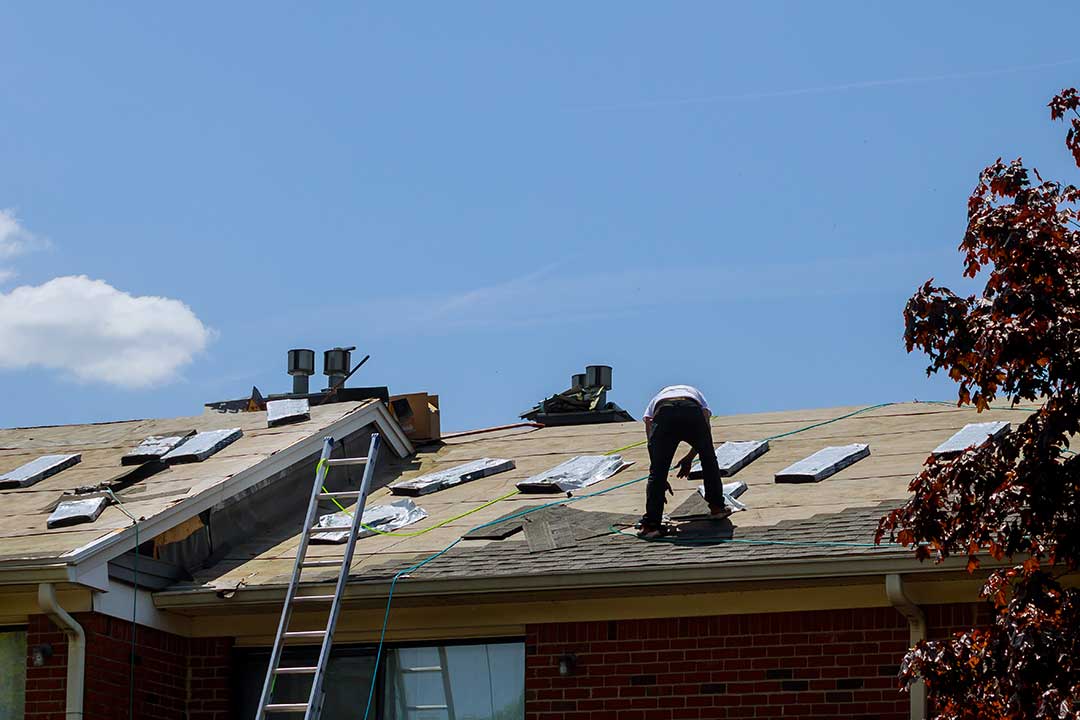
After the gutter channel is empty, run a modest amount of water through the system. The goal is to confirm that water reaches the bottom of the downspout and exits away from the foundation. A slow or overflowing gutter may indicate a blockage, a disconnected section, or a drainage problem below the visible opening.
Do not stand on the top two or three rungs of a ladder. Reposition it instead of leaning sideways to reach farther. Overreaching is a common cause of ladder falls.
What should be checked after debris is removed?
Debris removal should include a visual inspection, but it should not involve lifting shingles or dismantling roof components. From a safe position, look for:
- Missing, cracked, or lifted shingles
- Exposed underlayment or roof decking
- Bent or separated flashing
- Damaged vent pipes or vent covers
- Sagging roof sections
- Granules collecting heavily in gutters
- Dark stains or damp areas on exterior walls
- Water marks on ceilings or in attic spaces
A few loose granules in a gutter can occur naturally as shingles age. Large quantities after a storm, visible bald areas, or widespread granule loss may indicate roof wear.
Inside the attic, damp insulation, stained wood, musty odors, or daylight visible through the roof can signal water entry. Do not enter an attic during active leaking if electrical wiring or wet insulation is present.
What debris should not be handled casually?
Some materials require extra caution. Animal nests, droppings, wasp activity, mold-like growth, and decomposing organic matter can create health risks. Avoid disturbing nests or enclosed piles with bare hands.
Storm debris may also include broken glass, treated lumber, nails, or fragments of roofing materials. Wear protective gloves and eye protection, and place sharp material in a rigid container rather than a thin trash bag.
Snow and ice should not be chipped aggressively from shingles. Removing frozen material with a shovel or metal tool can damage the roof surface. Ice buildup at the eaves may also be related to ventilation or heat-loss conditions that require more than simple scraping.
How often should a roof be cleared?
There is no universal schedule. In the local climate, inspection is especially useful after autumn leaf drop, major wind events, heavy rain, and winter storms. Homes surrounded by mature trees may need more frequent checks than homes with open surroundings.
A practical routine is to inspect from the ground several times a year and after unusual weather. Pay particular attention to valleys, roof sections beneath tree limbs, low-slope additions, gutters, and downspout outlets.
Removing loose debris is not a substitute for roof maintenance. If debris has exposed damage, water is entering the building, the roof structure is sagging, or access requires unsafe climbing, the area should be left alone until the hazard can be evaluated safely.
